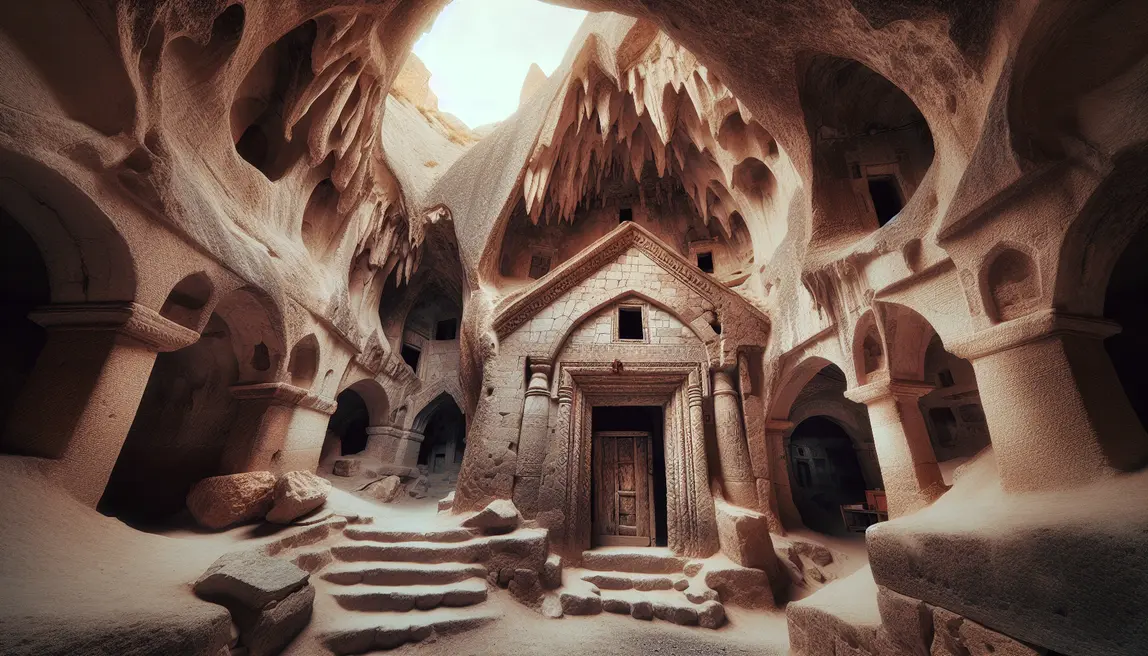
In the heart of Turkey’s surreal landscapes lies a hidden marvel: the world’s largest underground city Cappadocia, known as Derinkuyu, which sheltered up to 20,000 people beneath the earth’s surface. This extraordinary subterranean metropolis, carved deep into soft volcanic rock, defied the need for daylight and surface refuge, sustaining human life for extended periods amid invasions and societal upheavals. As researchers and visitors explore this complex today, the underground city Cappadocia reveals not just ancient engineering prowess but a powerful story of survival, resilience, and ingenuity etched beneath fairy chimneys. Understanding Derinkuyu offers valuable insights into ancient urban planning and human adaptability to extreme environments.
Background & Context of the Underground City Cappadocia
Cappadocia, located in central Anatolia, Turkey, is world-renowned for its otherworldly topography dominated by ‘fairy chimneys’—tall, thin spires sculpted by erosion from volcanic tuff. Yet below this ethereal scenery, the underground city Cappadocia stands as a testament to millennia of human history and innovation. This subterranean marvel was not a mere hiding place but a fully functioning city carved up to 85 meters below the surface, with 18 expansive levels interconnected by miles of tunnels and chambers.
Known historically as Derinkuyu (meaning ‘deep well’ in Turkish), the city was originally Elengubu and served myriad civilizations. From the Hittites possibly carving its earliest levels around 1200 BCE to successive expansions by Phrygians, Persians, and Byzantine Christians, it evolved as a living fortress that addressed the threats posed by Cappadocia’s location at the crossroads of empires. This region’s geopolitical volatility demanded innovative defensive measures, and the underground city Cappadocia emerged as a formidable refuge.
Rediscovered in 1963 by chance when a local resident noticed chickens disappearing into a crack in his home, the city’s labyrinthine passages surprised archaeologists and historians alike. Today, Derinkuyu forms part of a larger network of more than 200 underground settlements, creating a unique regional legacy recognized by UNESCO as a World Heritage Site in 1985. The soft volcanic rock, known as tuff, was crucial for the city’s construction, being easily carved yet structurally sound. The geological conditions allowed ancient builders to fashion an environment capable of supporting thousands safely hidden from the dangers above.
Detailed Analysis: Structure, Purpose, and Daily Life in Derinkuyu
Derinkuyu encompasses an astonishing multi-level underground city beneath Cappadocia, stretching across 18 levels and extending for miles. It was never a temporary shelter but a comprehensive urban center with residential quarters, communal areas, schools, chapels, food storage, wineries, and livestock stables. The design anticipates long-term habitation during times of siege or turmoil.
The city’s defensive architecture is especially striking. Narrow corridors were engineered to funnel and control movement, while giant rolling stone doors could isolate sections, preventing intruders’ progress. These doors had strategically placed holes to allow defenders to attack unseen enemies. More than 50 ventilation shafts ensured a consistent fresh air supply throughout, an engineering feat remarkable for its era. A deep well provided uncontaminated water, safeguarded by the ability to isolate it from surface access to prevent poisoning.
Daily life underground was challenging. Residents managed waste carefully, using sealed clay jars and designated areas for the dead to maintain hygiene in the confined space. The organization of livestock near the surface and living quarters deeper below helped mitigate odors and gas buildup. Evidence suggests inhabitants engaged in winemaking, indicated by vats and amphorae found within, underscoring the necessity of preparation for extended stays underground during upheavals.
Beyond practical survival, Derinkuyu housed a Byzantine missionary school with vaulted ceilings, reflecting a cultural and religious life that persisted even underground. The city’s use peaked during the Byzantine era amid 7th-century raids, when regional invasions necessitated reliable protection and self-sufficiency. This underground civilization balanced permanence and defense, suggesting a complex social organization and high levels of engineering knowledge.
Expert Perspectives on the Underground City Cappadocia
“Derinkuyu is not merely an architectural wonder; it manifests the survival instinct and ingenuity of diverse civilizations over millennia. Each phase of its expansion reflects a response to evolving political and military threats.” — Dr. Ayşe Demir, Archaeologist, Turkish Heritage Institute
Experts underscore the significance of Derinkuyu as a layered historical record. Archaeological evidence supports that early Hittite inhabitants carved refuge caves that later civilizations enlarged, demonstrating a continuum of adaptation and cultural integration. The city’s engineering—its ventilation shafts, water management, and stone doors—suggests sophisticated planning far beyond what early tools and materials might imply.
According to reports from the BBC and Turkish archaeologists, Derinkuyu’s discovery has challenged conventional understandings of ancient urban centers and defense mechanisms. Experts continue to examine how this underground network integrated with over 200 other smaller subterranean settlements across Cappadocia, potentially connecting a vast hidden civilization.
The geological uniqueness of Cappadocia’s volcanic tuff has also attracted researchers exploring human interaction with environment. The ease of carving combined with the rock’s stability enabled such extensive underground construction, which remains relatively rare globally. This geological aspect informs ongoing studies into sustainable architectural techniques derived from ancient models.
Implications & Impact: Why the Underground City Matters Today
The underground city Cappadocia stands as a profound example of human resilience and adaptability—qualities increasingly relevant in today’s context of climate change, geopolitical instability, and urban crowding. Derinkuyu shows that survival in adverse conditions often depends on innovative use of local resources and forward-thinking infrastructure designed for long-term sustainability.
For modern urban planners and architects, the subterranean city offers inspiration for disaster-resilient habitats and underground living solutions, particularly in disaster-prone or highly populated areas. Its advanced ventilation and water management systems provide ancient blueprints for sustainable underground engineering.
Tourism impacts have been significant, bringing global attention to Cappadocia but also posing preservation challenges. Balancing the influx of visitors with conservation goals remains central to protecting this unique site. The success of Derinkuyu as a World Heritage Site highlights international collaboration possibilities for preserving cultural heritage while enabling educational and economic benefits.
Moreover, the rediscovery of such underground networks prompts reconsideration of how we define ancient civilization and urbanization. Increasingly, researchers propose that human ingenuity in spatial use extended beyond surface settlements, with subterranean habitats playing crucial roles in social and military strategies throughout history.
Historical Context and Precedents for Underground Cities
Underground cities are not unique to Cappadocia but are part of a broader pattern of ancient subterranean architecture globally. Examples include the underground Comet Catacombs of Alexandria and the subways of ancient Rome, though few match the scale and complexity of Derinkuyu.
The Hittites, credited with initiating Derinkuyu’s earliest levels, were a formidable Bronze Age empire known for strategic fortifications and innovative construction. Their legacy in the city represents a tactical retreat from invasions and a secure stronghold in hostile environments. Later developments by the Phrygians and Byzantines reflect continuity in using underground spaces for shelter and defense during waves of conquest and conflict throughout Anatolia.
Cappadocia’s underground cities illustrate a continuum from Bronze Age crisis management to Byzantine era urban planning, encapsulating how underground architecture evolved in response to shifting political, military, and cultural demands across centuries.
Future Outlook & What’s Next for the Underground City Cappadocia
Ongoing archaeological work continues to uncover new sections of the underground city Cappadocia and related subterranean sites. The discovery in 2014 of a massive underground settlement below Nevşehir hints that much remains hidden beneath the Anatolian plains. As technological advances in excavation, ground-penetrating radar, and 3D mapping improve, researchers anticipate further revelations about these hidden networks and their historical interconnections.
Preservation efforts are intensifying to combat weathering and human impact. Scholars and conservators emphasize sustainable tourism and educational initiatives to raise awareness about the site’s significance and fragility. Digital reconstructions and virtual tours are becoming vital tools to expand access globally without compromising physical integrity.
UNESCO’s role in safeguarding Derinkuyu and Cappadocia exemplifies international commitment to heritage preservation. Future work may focus on integrating underground city Cappadocia into broader narratives of cultural exchange and technological evolution in ancient civilizations.
Conclusion
The underground city Cappadocia, particularly Derinkuyu, stands as a monument to the human spirit’s ability to innovate against the odds. Housing 20,000 people beneath the surface for months, it reveals a layered history of survival, engineering ingenuity, and cultural persistence. This subterranean metropolis challenges us to rethink ancient civilization beyond the surface, highlighting a profound relationship between people, their environment, and the need for security in turbulent times.
For readers and travelers alike, Derinkuyu offers more than a fascinating historical site — it embodies lessons in resilience and sustainable living that resonate in today’s complex world. As we face modern challenges, the underground city Cappadocia inspires us to explore alternative living solutions and appreciate the remarkable achievements hidden beneath our feet.
For more updates on underground city Cappadocia, stay tuned to our latest coverage.
About The Author