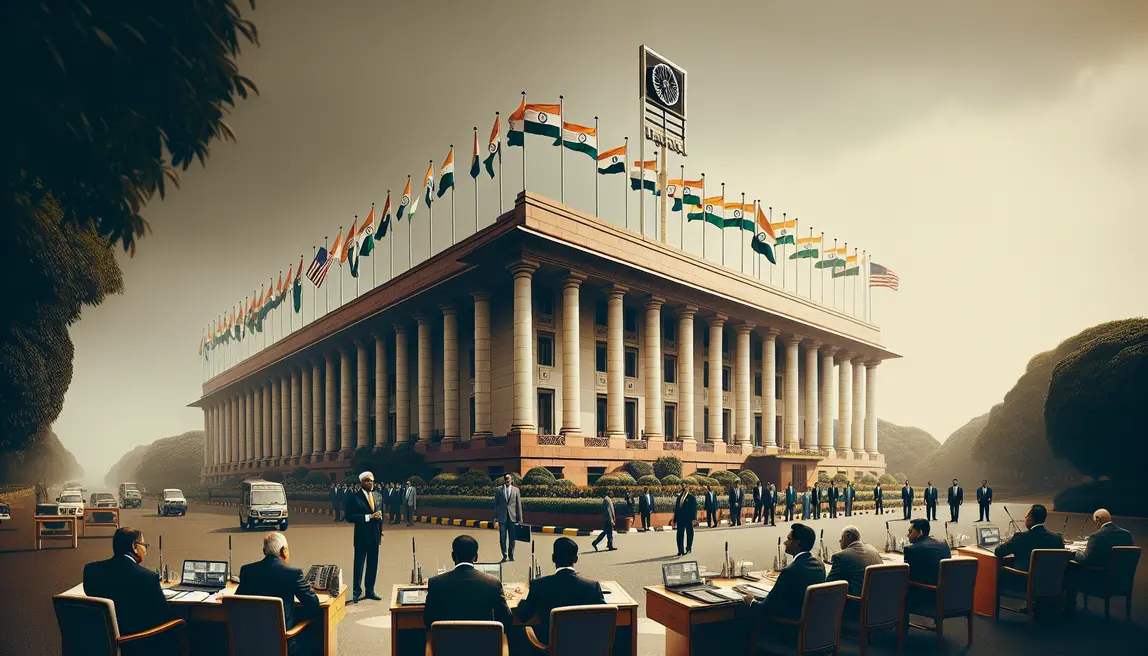
In a brazen public statement, Nalin Haley, son of former US Ambassador Nikki Haley, launched sharp criticism against the Indian government amid critical US-India trade talks. His comments, which accuse India of having a “cheap government” and label it a less-than-reliable ally to the United States, come at a sensitive time when both nations are close to finalizing a significant trade deal. This development sheds new light on the complexities within the US-India relationship and provokes broader debates about diplomacy, economic policy, and strategic alliances in the current global context. The “nalin haley india criticism” has stirred controversy across social media platforms, raising questions about the future tone of bilateral engagements.
Background & Context: US-India Ties at a Crossroads
The US and India have been strengthening their strategic and economic ties over the past two decades, driven by shared democratic values and mutual concerns over rising geopolitical challenges, particularly in Asia. The ongoing trade negotiations, slated to culminate soon, aim to boost bilateral commerce, reduce tariffs, and address longstanding concerns such as market access and intellectual property protections.
However, this relationship has not been devoid of friction. Issues such as visa policies, defense procurement, and conflicting global foreign policies occasionally strain cooperation. Nalin Haley’s comments emerge against this backdrop, highlighting diverging perceptions on India’s role as a US ally.
Detailed Analysis of Nalin Haley’s Criticism
Nalin Haley accused India of sending “cheap labor” to the United States, buying “cheap oil from Iran,” and acquiring “cheap weapons from Russia,” labeling India’s government as “cheap.” These remarks reflect a broader mistrust about India’s foreign policy decisions and labor practices perceived by some in the US political spectrum.
Haley’s remarks specifically target India’s economic choices, which include substantial energy imports from Iran despite US sanctions, and defense purchases from Russia, against the grain of Washington’s expectations from strategic partners. His language underscores a zero-sum view of alliances, implying that India’s independent policies are detrimental to US interests.
This narrative is further complicated by Haley’s opposition to prominent Indian-American political figure Vivek Ramaswamy, whose policies advocate closer US-India decoupling from China, seen as a more nuanced approach.
Expert Perspectives on Nalin Haley India Criticism
Experts observe that while Nalin Haley does not hold an official position, his statements echo sentiments from certain factions within the US that question the reliability of US allies pursuing independent foreign policies. According to foreign policy analyst Dr. Anjali Menon, “Haley’s criticism reflects an undercurrent of skepticism in Washington about India’s balancing act between major powers. However, India’s independent foreign policy is a strategic necessity, not an act of disloyalty.”
Meanwhile, trade experts emphasize that such rhetoric could complicate ongoing negotiations. Dr. Rajiv Kumar from the Institute for International Trade states, “Negative public statements can undermine trust and delay critical agreements like the US-India trade deal, which holds significant economic promise for both nations.”
Implications & Impact on US-India Relations
The “nalin haley india criticism” could influence perceptions and diplomatic interactions at multiple levels. For policymakers, this signals the growing challenges in managing domestic political voices that impact foreign diplomacy. For the broader public, such statements risk inflaming nationalistic sentiments and misinformation.
India, as a major emerging economy, stands at a strategic crossroads, depending heavily on partnerships with the US for defense, technology, and economic growth, while simultaneously diversifying its global alliances. This criticism stresses the need for a balanced approach in bilateral relations, ensuring strategic respect alongside economic cooperation.
Historical Context: Precedents in US-India Diplomatic Strains
US-India relations have historically witnessed peaks and troughs, influenced by Cold War politics, nuclear policies, and trade disagreements. Previous administrations have had to navigate tensions arising from India’s non-aligned stance, its nuclear tests in the late 1990s, and trade protectionism concerns.
Similar public critiques and political rhetoric have surfaced before, often coinciding with complex negotiations or election cycles, underscoring that such discourse, while controversial, is part of a broader democratic engagement over foreign policy directions.
Future Outlook & What’s Next in US-India Relations
Looking ahead, the US and India face the challenge of consolidating their partnership despite internal political pressures and external geopolitical shifts. The trade deal nearing conclusion will be pivotal, potentially unlocking new economic opportunities while setting frameworks for future cooperation.
However, voices like Nalin Haley’s highlight the importance of clear communication and managing domestic narratives that can affect international diplomacy. Both governments may need to engage in public diplomacy measures to assure stakeholders and maintain momentum in strategic ties.
Conclusion: Understanding the “Nalin Haley India Criticism” in Context
The criticisms made by Nalin Haley, emphasizing India as a “cheap government” and an unreliable US ally, bring into focus the complexities of the evolving US-India relationship. While reflective of some political perspectives within the US, these remarks should be understood amidst broader historical, economic, and geopolitical realities.
For readers, this underscores the importance of assessing international relations through multiple lenses—recognizing the balancing act that nations like India perform in a turbulent global landscape. It also highlights how individual voices in the political arena can influence international discourse and negotiation dynamics.
To grasp the significance of these developments, one should monitor not only official diplomatic engagements but also the undercurrents shaping public opinion and party politics in the US.
For more updates on nalin haley india criticism and US-India relations, stay tuned to our latest coverage.
References and further reading:
- US Trade Representative official overview of US-India trade negotiations
- Council on Foreign Relations background on US-India relations
- Brookings Institution analysis of India-US strategic partnership
- Vivek Ramaswamy 2023 speech on US-India relations
- CNBC report on Vivek Ramaswamy’s campaign finance report and grassroots support
About The Author





4 thoughts on “Nalin Haley Criticizes India Government Amid US-India Deal”
Comments are closed.